Asparaginase has been a core component of multiagent treatment regimens in ALL/LBL for more than 45 years1
Asparaginase deprives leukemia cells of asparagine.1
- Asparaginase converts serum asparagine into aspartic acid and ammonia, depriving leukemia cells of asparagine1
- The depletion of asparagine prohibits RNA and protein synthesis, leading to leukemia cells being unable to proliferate and survive1,2
Since the introduction of asparaginase in ALL treatment protocols, survival estimates have seen steady improvement1,3,4
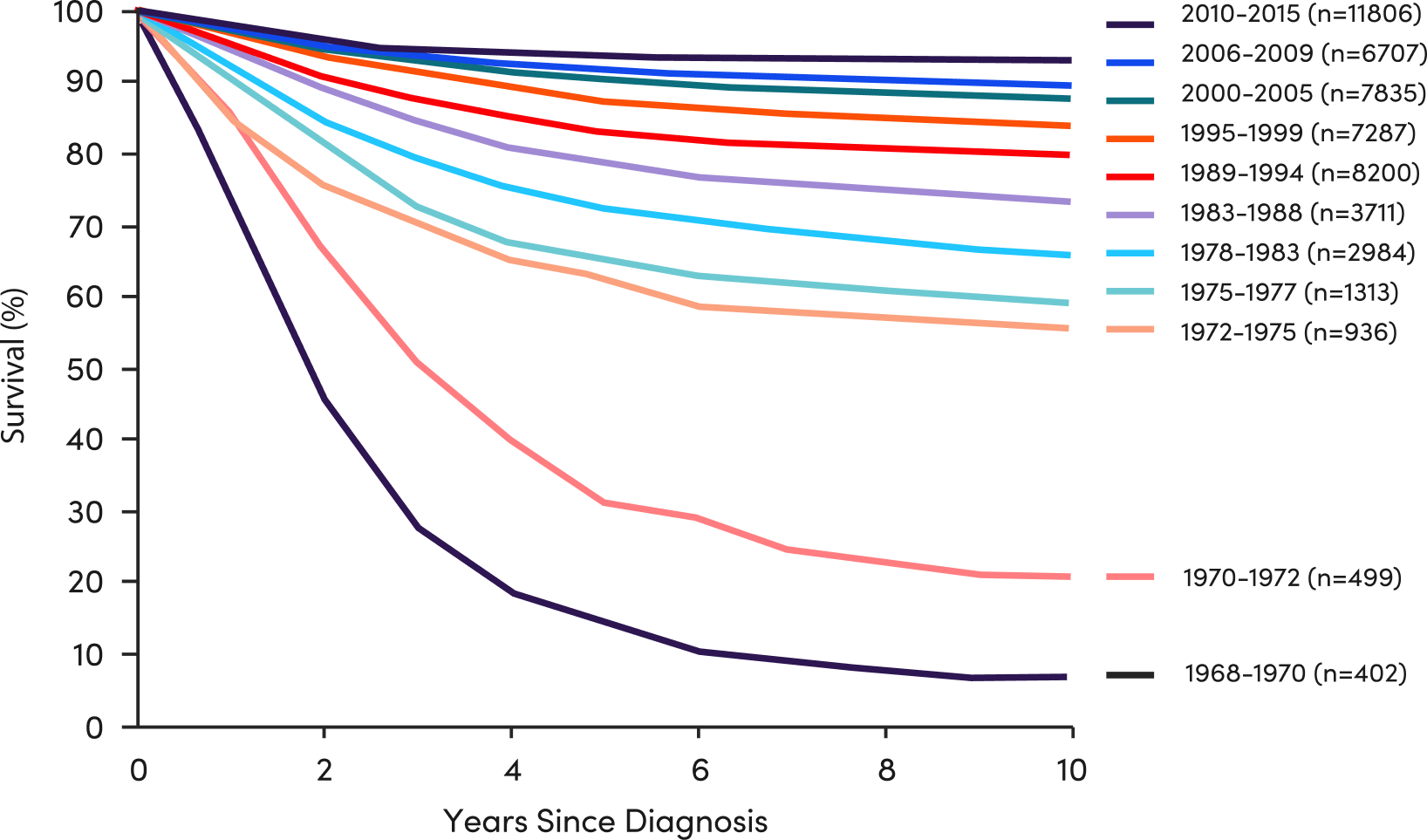
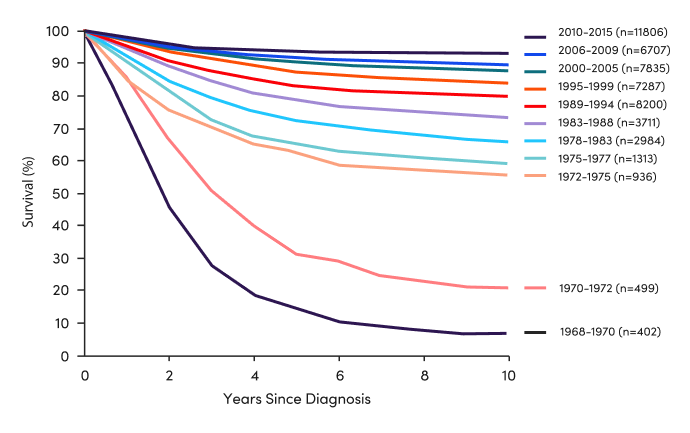
Improvement in patient survival can be seen in a Kaplan-Meier analysis of survival for over 50,000 patients with ALL enrolled on COG or legacy COG trials from 1968 to 2015.4
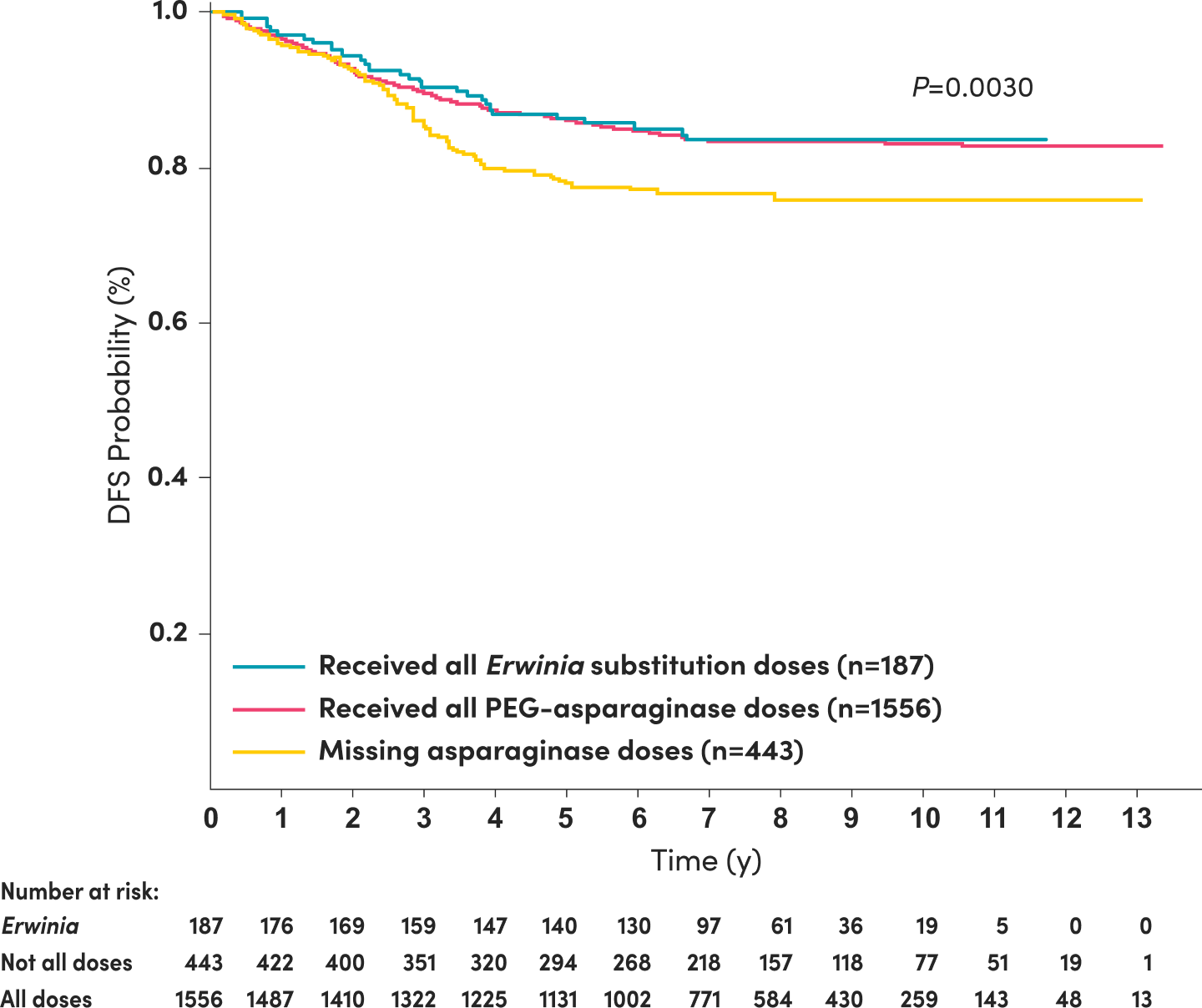
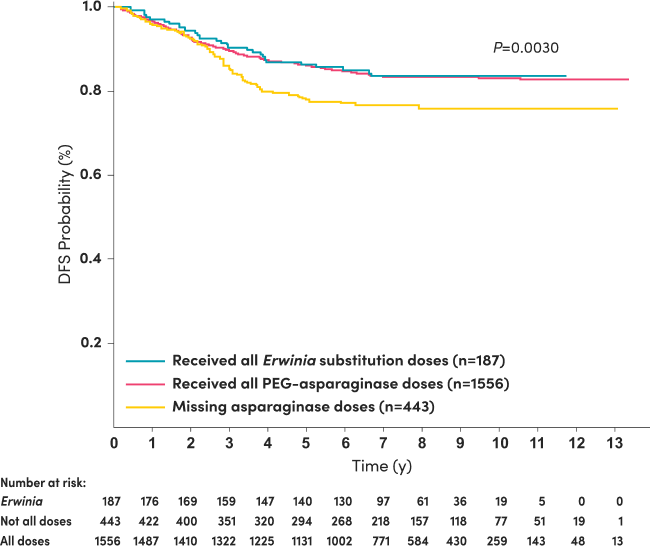
The impact of missed doses on disease-free survival (DFS)5
A 2020 study by Gupta et al in high-risk B-ALL COG patients demonstrated5:
- Significantly inferior DFS was seen in patients who did not receive all prescribed asparaginase doses
- Patients receiving all Erwinia substitution doses achieved similar DFS compared with patients receiving all pegaspargase doses
- Asparaginase missed doses is a predictor of DFS among patients, even when adjusted for other risk factors such as age, cytogenetics, time to response, WBC count, and CNS status
DFS of NCI high-risk patients stratified by asparaginase received1
Missed asparaginase doses can lead to compromised patient outcomes
Missing asparaginase doses5
increased the risk of an event such as relapse, second malignant neoplasm, or death5

(HR=1.5, 95% CI: [1.1-1.9], P=0.002)5
Of patients who failed to receive all prescribed asparaginase doses5


experienced relapse
A comprehensive 8-year [2004-2011] study including over 8300 patients, in partnership with the COG.5
The study included newly diagnosed B-ALL patients aged 1-31 years who were enrolled in 1 of 2 COG clinical trials. This included 5195 patients within the COG study AALL0331 (NCI SR B-ALL, age >1 and <10 years, initial WBC count <50,000/μL; 2005-2010) and 3001 patients within AALL0232 (NCI high-risk B-ALL, aged 10-30 years or initial WBC count ≥50,000/μL and any age; 2004-2011, or NCI SR with testicular disease or some patients with steroid pretreatment).5
This landmark survival analysis was for the 2,186 NCI high-risk patients who started maintenance. DFS was defined as time from maintenance initiation to relapse, death, development of a second malignant neoplasm, or last follow-up.5
In high-risk patients who did not receive all prescribed asparaginase doses (n=443), 99 (22.3%) had an event, including 95 (21.3%) with relapse, 2 (0.4%) with second malignant neoplasms, and 2 (0.4%) who died off therapy as a first event.5
There were several study limitations, including (but not limited to)5:
- Exact number of missed pegaspargase doses could not be determined
- Generalizability of our results to patients with T-ALL is unknown
Switching to an asparaginase with minimal immunologic cross-reactivity can help preserve patient outcomes6
- Compared to those who experienced hypersensitivity and subsequently missed doses, higher risk (high-risk + slow early responders for SR) patients who switched to an Erwinia-derived asparaginase therapy due to hypersensitivity were at lower risk of relapse and had higher rates of DFS5
- Rechallenging patients can compromise their outcomes and further expose them to hypersensitivity7,8
When hypersensitivity threatens patient outcomes, consider switching to an immunologically distinct asparaginase9
Help protect patient outcomes
RYLAZE is the only FDA-approved Erwinia asparaginase for the treatment of ALL/LBL for patients who develop hypersensitivity to E. coli asparaginase10